By Christine Ayala
When I downloaded a focus app (Opal) that blocks the use of other distracting apps, it told me I was on track to spend 32 years of my life on my phone. I’m now down to a projected 16 years, which is still horrifying — but hey, it’s progress.
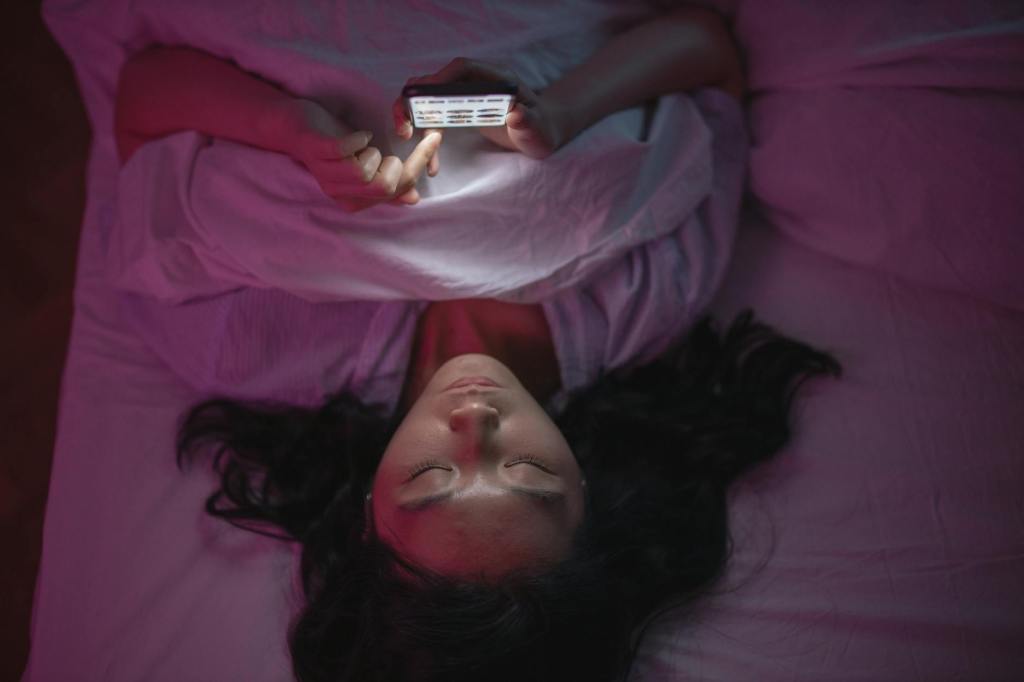
On a bad day, I can rack up 7 hours of phone screen time, which seems impossible on its own, but that’s not accounting for the time I spend on my laptop — working and doing everything else, from grocery shopping to losing track of time on Netflix, YouTube or Instagram (because I deleted Instagram off of my phone, which made a big dent in my projected years of screen time). On a good day, I hardly use my phone at all, and I feel like I’ve unlocked some superior part of me that is above mindless scrolling… until the next 7-hour day rolls around.
Apparently, I have a lot of company, as Americans (aged 16 to 64) average more than 7 hours of screen time in 2024, while the global average is 6 hours and 40 minutes. It is worth noting that screen time for American adults increased by over 60% on average during the COVID-19 pandemic, peaking at more than 13 hours a day. So, hey, progress.
Still, for device-dependent adults, how much screen is too much?
According to UCLA Assistant Adjunct Psychology Professor Yalda T. Uhls, it’s the wrong question. Uhls — who is also a former movie executive and now studies the health impacts of device use and screen time — points to a list of five questions to check in with yourself if your screen time feels too high:
- Are you sleeping well?
- Are you eating well?
- Are you leaving the house and being social?
- Is your work going well?
- Are you physically active?
If each can be answered with a “yes,” your screen time probably isn’t a reason for concern. If there are a few no’s, you may benefit from scaling back. However, rather than focus strictly on the amount, Uhls says how screen time is spent is much more significant.
“[W]hat’s challenging about the time-limit focus is that it takes away from the content conversation, and the content conversation should be what we are leading with,” she told TIME.
Social media scrolling, in particular, is more detrimental than other uses — so limiting this type of screen time is important. And you can probably breathe a little easier for losing track of time rewatching your comfort show.
In a 2021 study, Melissa Hunt, associate director of clinical training at the University of Pennsylvania’s psychology department, found the highest level of well-being among college students who used social media for 30 minutes a day (compared to participants who scrolled for much more time and those who didn’t use social media at all).
“They’re the most connected, the least lonely, the least depressed compared to people who use way too much, but also compared to people who use none,” she told TIME, particularly when that time is spent actively interacting with people they actually know, rather than just scrolling or following influencers, celebrities or other strangers who may present an unrealistic or highly edited lifestyle. And Hunt says up to 60 mins is likely the “sweet spot” for those who can’t realistically stick to half an hour.
Still, long bouts on a device — whether on social media, TV binging or gaming — can have negative health impacts. Sitting for extended periods of time, especially with poor posture, can cause muscle stiffness and tightness, particularly neck and back pain. Prolonged and habitual sitting also increases the risk of high blood pressure, insulin resistance and obesity. Gaming, in particular, is linked to greater food intake without an increase in hunger. Staring at a screen can cause headaches, eye strain, poor concentration and poor sleep. Moderate to severe depression in adults has also been linked to higher screen time. For some, gaming can lead to repetitive stress injuries. For others, even addiction-like symptoms can present around social media use and video games.
So, Uhls’ list of questions is an easy way to check for indications that excessive screen time is having a detrimental physical, mental or social impact.
“[T]oo much screen time might interfere with opportunities to gain greater benefits that experiencing a larger variety of activities offers,” writes psychologist Mike Brooks, Ph.D., in Psychology Today. “Notice there is BIG difference between too much screen time actually causing lasting harm versus it being ‘sub-optimal’ or ‘not ideal.’”
So, while there are no universal or clear guidelines for overall screen time across devices and uses for adults, researchers have shown that limiting social media use to 30-60 minutes a day is ideal, as well as the importance of noticing if overall screen time is contributing to negative outcomes in your personal or professional life and general well-being.
Christine Ayala is a health and wellness writer and content creator. She has more than a decade of reporting and editing journalism experience. She is certified as a personal trainer by the National Academy of Sports Medicine (NASM). She is a strength athlete who has competed as a powerlifter, including at the USPA 2022 Drug Tested Nationals.
 Fit Happy Life
Leave a comment